
In 2018, the Herald magazine assigned me the responsibility to report on electoral contests in eight districts of Sindh, namely Mirpurkhas, Tando Allahyar, Tando Muhammad Khan, Matiari, Dadu, Jamshoro, Hyderabad, and Sanghar.
Because the magazine had space constraints, only the excerpts from those reports were published in Herald’s July 2018 issue while the rest of it — approximately 5000 words — remained unpublished.
I have finally decided, in 2025, to put them all online in their original form because firstly, I worked hard for them and traveled far and wide in the intense June heat of Sindh so I think they should not remain unused; and secondly, I hope, someone some day may find them usable for some project that they might be doing. If that holds true even for one person, then I think the reports will have achieved their purpose.
Seventh in this series of eight posts is the electoral profile of Sindh’s district Jamshoro, as written in the summer of 2018. The constituencies may have changed over the years and may not necessarily match with the current numbering.
By: Bilal Karim Mughal in Jamshoro
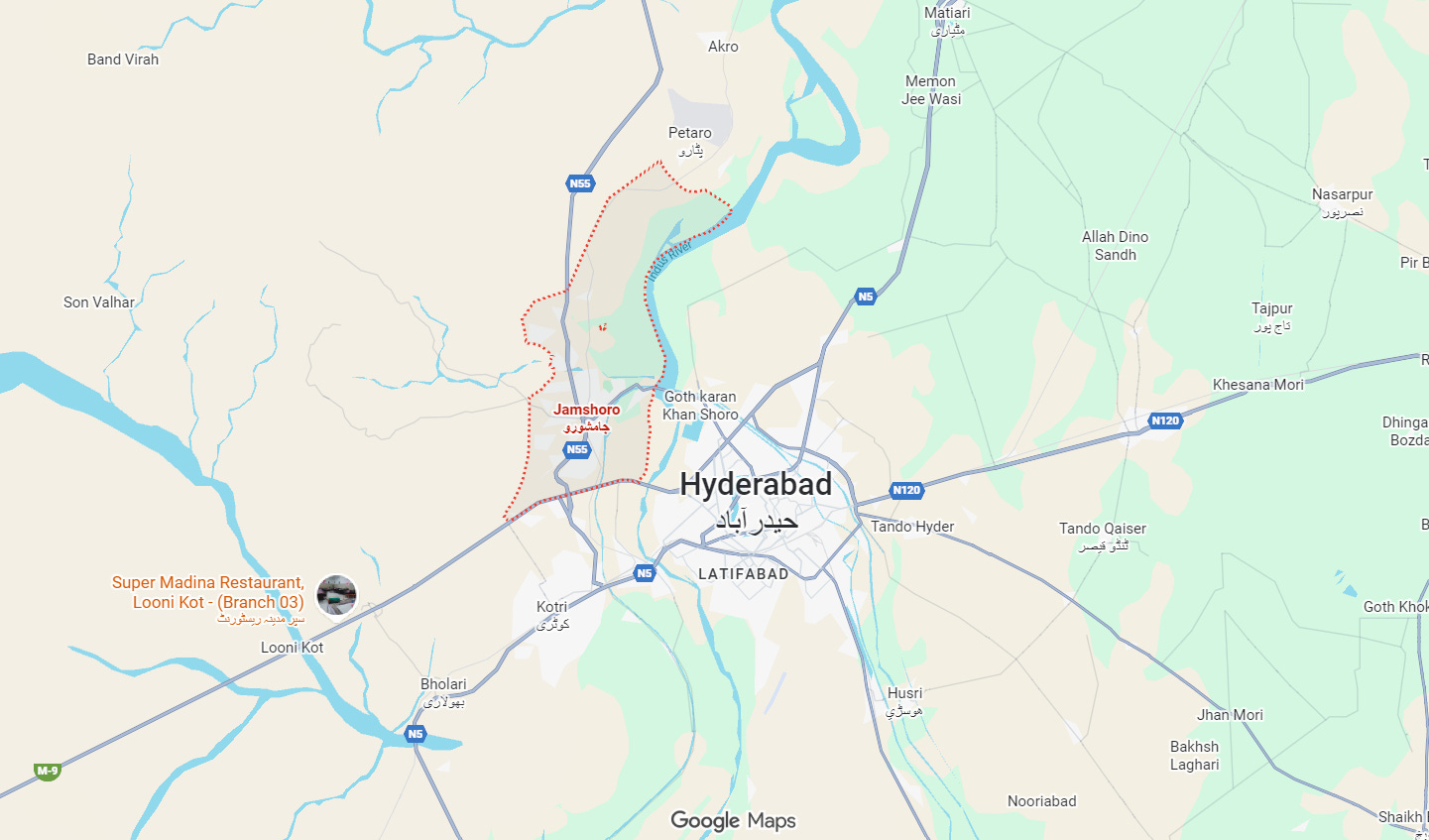
District Jamshoro, which was split from the district Dadu in 2004, has three provincial and one national seat.
The provincial seats are as follows:
- PS-80 talukas (subdistrict or tehsil) of Sehwan and some areas of Manjhand (previously PS-71)
- PS-81 taluka Thano Bula Khan and areas of taluka Kotri (previously PS-72)
- PS-82 Manjhand, Kotri City, and Town Committee Jamshoro (previously PS-73)
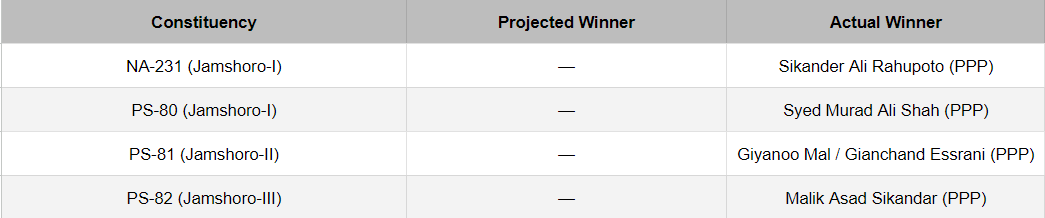
The national seat NA-231 has almost always been a Pakistan Peoples Party-Parliamentarians (PPPP) stronghold, and was won by Nawab Abdul Ghani Talpur in 2002 and 2008, and his brother-in-law and biggest landholder of Jamshoro, Sardar Malik Asad Sikandar Khan in 2013 on the PPPP ticket, who defeated Syed Jalal Mehmood Shah of the Sindh United Party (SUP) by 70,972 votes.
Khan has also remained an MNA on the same seat in 1990 elections as well when it was NA-177 Dadu-I. His father, Malik Sikander Khan defeated prominent Sindhi nationalist figure, G.M Syed on this seat (NW-125) in the general elections of 1970s. The Maliks, therefore, are not unknown here in this area, and joined the PPPP in 2008.
This time, Sikander is competing against Dr Sikandar Shoro, former PPPP MPA and former special assistant to the then CM Sindh Murad Ali Shah at PS-82 Kotri. Sikander is competing on the ticket of PPPP which was not granted to Shoro, who won at PS-71 (now PS-80).
Shoro, who had beat Syed Jalal Mehmood Shah of the SUP by 15,445 votes in 2013 elections is, therefore, competing independently against Malik Asad Sikander.
The areas that comprise PS-82 (Manjhand and Kotri) are said to be the strongholds of Shoro, and a tough competition is expected here for Sikander. But the Malik family, whose one candidate Malik Pahar Khan is Pakistan Tehreek-i-Insaf (PTI) candidate for NA-231, has a tight grip on the Jamshoro district because of his landholding.
One factor that can go in the favour of Shoro is his perceived deal with Syed Jalal Mehmood Shah at NA-231, where he is competing against Sikandar Rahupoto of the PPPP.
It is believed that Shoro’s supporters, who have more than 3000 votes registered in the district, will vote for Syed Jalal Mehmood Shah in return of Shah’s support for Shoro at PS-82.
Shah’s competitor, Rahupoto, is a figure not perceived as comparable in political influence to Sikander and is said to be influential only till Sehwan.
Meanwhile, Jalal Mehmood Shah, former Deputy Speaker of Sindh Assembly (PS-59 Dadu, 1997) seems to be in a strong position because despite Sikander’s macho, he was able to garner 58,528 votes in last elections.
With the support of disgruntled factions, taking advantage of the weak position of Rahupoto, and an absence of a towering candidate like Sikander, Shah may be able to put up a better competition than last time.
At PS-80, Sindh’s outgoing CM Syed Murad Ali Shah of the PPPP is contesting against Syed Jalal Mehmood Shah.
Murad’s father Abdullah Shah had served as CM Sindh from 1993 to 1996 in the second Benazir government. Murad, thus, enjoys support due to both the PPPP factor and because of his father’s legacy.
At PS-71 (now PS-80), Dr Sikandar Shoro had defeated Jalal Mehmood Shah in 2013 by 15,445 votes. But this time, due to Shoro’s conflicts with the PPPP and his apparent adjustment with Jalal Mehmood Shah, he may be able to get the better of Murad Ali Shah.
Also, this constituency includes areas of Sann, which is the ancestral area of G.M Syed and Jalal Mehmood Shah, where they enjoy public support by default.
At PS-81 Thano Bula Khan, Saleh Birhamani is fighting as an independent candidate against Gianchand Essrani of the PPPP. Essrani is believed to be a very close aide of PPPP Chairman Asif Ali Zardari, whereas his rival, Birhamani is a local feudal who has fallen out of favor of the PPPP.
He will now reportedly trade support with Jalal Mehmood Shah and Sikandar Shoro, and the trio of Shah, Birhamani and Shoro seeks to defeat the PPPP candidates from Jamshoro district.

